After Hungary’s 2026 drought: soil recharge, halved sugar-beet crop
Cyclone Charles brought 71 mm of rain on average, but about 80% soaked into the soil. Sugar-beet yields fell to 30–35 t/ha; Kaposvár may produce only 50–60 thousand tonnes of sugar.
· 3 min read
In brief
- Cyclone Charles brought 71 mm on average; about 80% infiltrated the soil.
- Tens of millions of cubic metres retained; Lake Tisza keeps an extra 30 million m³ this winter.
- Sugar-beet yields 30–35 t/ha; Kaposvár may produce 50–60 thousand tonnes versus 125 thousand capacity.
After the 2026 drought, November’s Cyclone Charles — a mid-latitude low-pressure system — brought 71 millimetres of rainfall on average across Hungary. Most of that water soaked into the ground, so river and reservoir levels have risen more slowly than many expected. Sugar-beet yields, meanwhile, finished at barely 30–35 tonnes per hectare, leaving the Kaposvár sugar factory with only a fraction of the beet it can process.
Autumn rain went mainly into the soil
Until October the country saw persistently record-low river flows and severe water shortage. The long, soaking November rains allowed about 80 per cent of the precipitation to infiltrate slowly, said Gabriella Siklós, spokesperson for the General Directorate of Water Management (OVF). That is essential if the large groundwater deficit is to ease, and it explains the sluggish rise in surface-water levels. Ecologically the rains are only the start of a more favourable turn; lasting recovery would still need months of above-average rainfall.
Tens of millions of cubic metres held back
Tisza flood levels allowed gravity-fed diversion: the Cigánd and then the Tiszaroff flood-retention reservoirs were opened. One facility took water again after standing closed for a decade and a half. Nationally, tens of millions of cubic metres have already been retained. On Lake Tisza an extraordinary winter operating regime keeps 30 million cubic metres more than the usual lower winter level. Water has been delivered around Kiskundorozsma and Szeged, into Hortobágy National Park — where part of Akolhát is flooded again — and into the Tiszalúc oxbow of the Tisza. On 30 November the hydrological new year begins and the dry period officially closes. Next year’s budget earmarks more than 220 billion forints for water retention and water-management investment, plus 40 billion for climate protection.
Sugar beet: decent sugar, far less crop
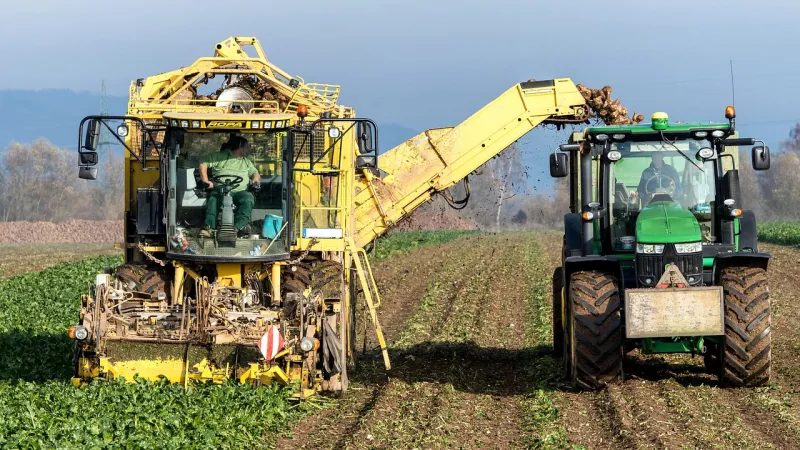
Árpád Dorogi, president of the National Association of Sugar Beet Growers, said both area and average yield have fallen: a crop of barely 30–35 tonnes has almost halved the raw material the Kaposvár factory can process. Sugar content in 2026 is about 17 per cent, which pays a premium, but the volume loss still means a substantial hit. Growing one hectare of sugar beet costs more than 1.1 million forints; growers are closing the year with a loss of about half a million forints. The drought has been felt for years from the centre of the country through the Danube–Tisza interfluve and eastern Hungary. Irrigated sugar beet does not even reach 10 per cent of the crop at home, compared with more than 30 per cent in Spain. Kaposvár can produce 125 thousand tonnes of sugar; this year only 50–60 thousand tonnes may be made. Dorogi said the plant has been loss-making for years and he fears the owner could decide to close it; Hungary has no other sugar factory.
“It would be good if Hungarian people bought sugar produced in Hungary.”
What it means
HungaroMet’s automatic network recorded a high of 7 °C at Sellye and a low of −7.2 °C at Zabar on Tuesday; the strongest gust was 72 km/h on János Hill in Budapest. For Wednesday HungaroMet issued a first-degree (yellow) warning forecast for snow in Pest, Heves, Komárom-Esztergom and Nógrád counties, and for freezing rain in Komárom-Esztergom and Veszprém. Holding water in the landscape supports farming and the next growing season; the 2026 drought has already left unirrigated sugar-beet growers in a far more uncertain position.
- 71 mm
- November rainfall, national average
- 80%
- rainfall that infiltrated the soil
- 30–35 t/ha
- 2026 sugar-beet yield
- 50–60 thousand t
- expected Kaposvár sugar output
Weather in the places mentioned
Zivor poll
After the 2026 drought, what matters most in the months ahead?
Enjoyed it? Share it!
Sources
- Eltűnhet a magyar cukorgyártás: a kaposvári üzem jövője is bizonytalanná vált (Index)
- Ez lett a sorsa több tízmillió köbméter víznek Magyarországon: itt az igazság (Agrárszektor)
This article was produced with the help of artificial intelligence, based on the sources listed. How we work
Comments
Comments are reviewed by automated moderation every four hours; anyone can report unlawful content. Rules