
Heat and drought will not leave Hungary short of Christmas trees
Growers contended with this year’s heat and rainfall deficit, but no shortage is expected. Pre-Christmas sales average 1.6–1.7 million trees, 60–70 per cent of them from Hungarian plantations.
· 2 min read
In brief
- Heat and drought are not expected to cause a Christmas-tree shortage.
- Domestic sales average 1.6–1.7 million trees, 60–70 per cent Hungarian.
- Growers are trialling drought-tolerant Turkish fir.
- Almost 4,000 ha are planted; Zala has the largest share.
This year’s heat and drought have weighed on Hungarian Christmas-tree plantations, yet the pre-holiday market is not expected to run short. Demand for cut trees has steadied in recent years: turnover averages 1.6–1.7 million trees, of which 60–70 per cent may come from domestic growers.
Rainfall deficit and a shift in species
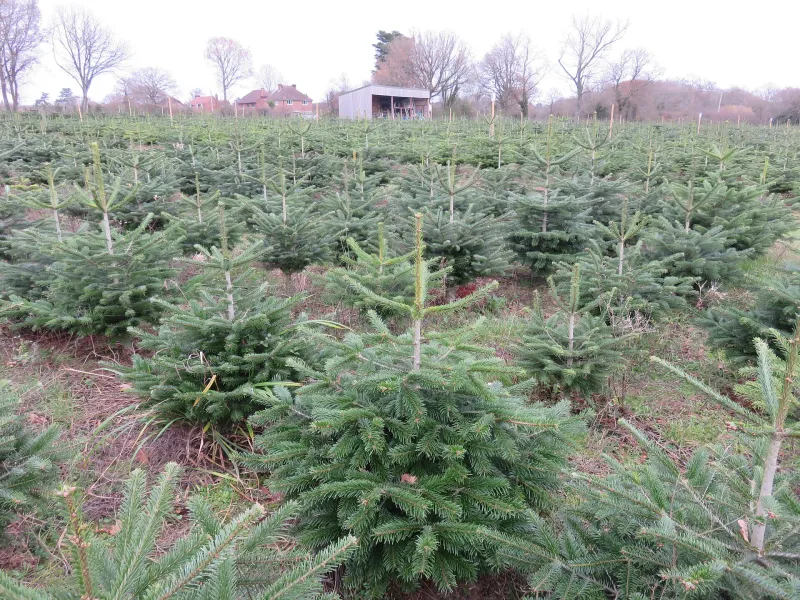
About two million firs and spruces are planted in Hungary each year. Trees typically take 6–10 years to reach a height suited to home decoration, so a single dry season does not empty the market at once, but a lasting lack of precipitation still threatens later harvests.
Irrigation is hard to arrange in tree plantations and would raise production costs sharply. Several growers have instead begun trialling Turkish fir, a species native to Turkey that copes well with drought and resembles the Nordmann fir popular in Hungary.
The National Association of Hungarian Christmas Tree Growers says buyers now choose almost exclusively the best-looking, blemish-free trees. Beckl Zsolt sees that quality demand as firmly established on the domestic market.
Where the trees come from — and where they go
Imports arrive mainly from Denmark and the Czech Republic. Romania and Italy are the leading export markets for Hungarian Christmas trees; some also go farther afield, still cheaper than competing foreign stock.
Almost 4,000 hectares are under Christmas-tree cultivation. Zala accounts for 2,000 ha, Vas 830, Somogy 686, Borsod-Abaúj-Zemplén 120 and Győr-Moson-Sopron 100. The most popular species are Nordmann fir, Norway spruce, Serbian spruce and blue spruce.
What it means for shoppers
Supply should still cover the usual domestic trade, but after heat and drought the choice remains concentrated on flawless trees. Hungarian trees are cut shortly before the holiday, so they travel a shorter distance than imported ones. The association notes that cultivated, compostable trees also provide work in growing regions — the largest plantations lie in the western counties of Transdanubia.
- 1.6–1.7 million
- annual domestic sales
- 60–70%
- share from Hungarian growers
- 4,000 ha
- area under Christmas trees
- 6–10 years
- years to cutting height
Zivor poll
What kind of Christmas tree will you choose this year?
Enjoyed it? Share it!
Sources
This article was produced with the help of artificial intelligence, based on the sources listed. How we work
Comments
Comments are reviewed by automated moderation every four hours; anyone can report unlawful content. Rules