
Persistent drought: 95% of Hungary was affected in 2025
After the exceptional drought of 2026, November’s average 71 mm of rain went mainly into the soil. River and lake levels are rising only slowly; months of above-average rainfall would still be needed to ease the deficit.
· 3 min read
In brief
- Drought covered 95% of Hungary in 2025, the highest share in the period studied.
- November averaged 71 mm of rain; about 80% soaked into the soil.
- OVF is retaining water on a scale of tens of millions of cubic metres; Lake Tisza holds an extra 30 million m³.
- The hydrological year starts on Monday, 30 November, with a focus on replenishing stores.
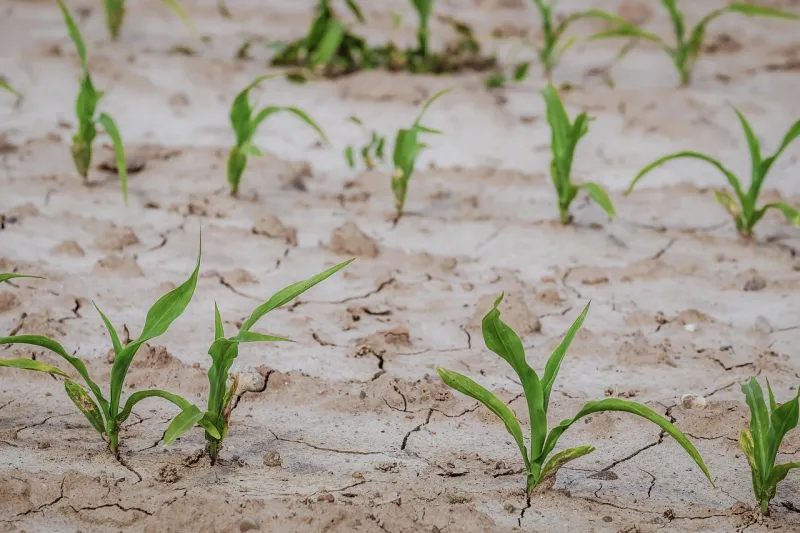
Prolonged dry spells and drought have become a recurring, and increasingly severe, challenge in Hungary. In the period examined, 2025 saw the highest share of land affected: drought appeared across 95 per cent of the country. Autumn rains after the exceptional drought of 2026 have so far been enough mainly to replenish soil moisture and groundwater.
A run of dry years
2012 was especially severe: drought covered 87 per cent of the country, 80,900 square kilometres. 2015, 2022 and 2025 were also unfavourable. In 2022, 85 per cent of the territory — about 78,700 square kilometres — was affected.
Over a longer record, 2011 was Hungary’s driest year since 1901, with a national precipitation total of 420 millimetres. That year Budapest recorded 291 mm, Siófok 287 mm, Miskolc 329 mm and Debrecen 321 mm. The lowest annual total was 203 mm in Szeged in 2000. Kecskemét received only 281 mm in 2025.
November rain: most of it went into the ground
November rainfall averaged 71 millimetres; about 80 per cent infiltrated into the soil, so the main gain was in groundwater. Lake and river levels are rising slowly. Ending the large water deficit would still require months of above-average precipitation.
László Gajdos summarised decades of shortage as follows: drought has been continuous for 30 years, soils have dried further, and “more than seven Lake Balatons’ worth of water is missing from Hungary’s soils.” The aim for next year’s budget is to put back the equivalent of one Lake Balaton.
Water retention across the country
The National Water Directorate (OVF) is holding water back intensively: reopening reservoirs that had been closed, flooding selected areas, and returning Tisza water to the landscape in volumes of several million cubic metres. Tens of millions of cubic metres have already been retained nationally, including around Hortobágy, Szeged and the Tisza corridor.
Lake Tisza is on an extraordinary winter operating regime, retaining 30 million cubic metres more than usual. Summer drought left large parts of its bed completely dry. The hydrological year begins on Monday, 30 November, with the emphasis shifting to filling stores and keeping them. The Central Danube Valley water authority is also using the wet November weather for retention works.
Persistent rainfall deficits can cause the greatest damage on the Great Plain and in farming regions. On the Homokhátság sand ridge, water shortage already affects local livelihoods and the area’s prospects. Hungary’s water reserves have been strained by climate change and human interventions together.
What this means for farming and water management
Autumn rain has improved soils, but still-low water levels and the dried bed of Lake Tisza show that recovery will take time. Retention — reservoirs, inundation, returning Tisza water — is the core task of the new hydrological year. Drought risk remains sharpest on the Great Plain and the Homokhátság.
- 95%
- land affected by drought in 2025
- 71 mm
- November national rainfall average
- 420 mm
- 2011, driest year since 1901
- 30 million m³
- extra water held in Lake Tisza this winter
Weather in the places mentioned
Zivor poll
What matters most after the prolonged drought?
Enjoyed it? Share it!
Sources
This article was produced with the help of artificial intelligence, based on the sources listed. How we work
Comments
Comments are reviewed by automated moderation every four hours; anyone can report unlawful content. Rules