Six days above 2 °C globally as a powerful El Niño peaks
On Monday the global mean surface temperature stood 2.24 °C above the pre-industrial baseline, a new daily record. The anomaly stayed above 2 °C for six consecutive days, driven by a strong El Niño and long-term warming.
· 2 min read
In brief
- Monday’s 2.24 °C global anomaly beat the 2023 daily record of 2.05 °C.
- The departure from pre-industrial stayed above 2 °C for six days running.
- That short spike does not officially breach the Paris 2 °C long-term limit.
- A strong El Niño plus fossil warming; drought and fires in Indonesia and the Amazon.
On Monday the Earth’s mean surface temperature was 2.24 °C above the pre-industrial baseline. That is a new daily record, above the previous peak of 2.05 °C in 2023. For the first time the global anomaly — the departure from that long-term, pre-industrial reference — remained more than 2 °C for six consecutive days.
A daily spike, not the Paris limit
The 2 °C daily threshold had been crossed only twice before, in November 2023 and February 2024. Those excursions were shorter and did not reach 2.24 °C.
The Paris Agreement’s 2 °C ceiling is a long-term, multi-year climate average, not a single day’s anomaly. A few days of extreme warmth therefore do not, officially, constitute a permanent breach of that limit. Researchers say the run nevertheless suggests the pace of global warming may have accelerated.
An unusually strong El Niño
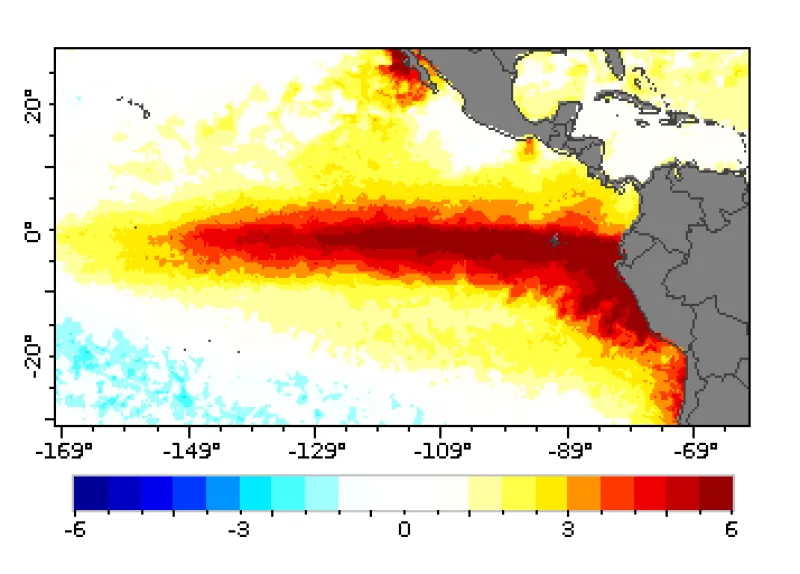
The temperature peaks sit on long-term warming from fossil-fuel burning and an exceptionally strong El Niño. El Niño is a natural swing in the tropical Pacific: surface waters stay unusually warm and rainfall and temperature patterns shift worldwide.
Samantha Burgess, climate-strategy lead at the EU’s Copernicus Climate Change Service, noted that an El Niño of this magnitude last occurred in the 1870s, when it was linked to a famine that killed fifty million people. The present cycle is expected to peak around now or by January at the latest; the full impact may unfold months later.
Drought, fires and carbon dioxide
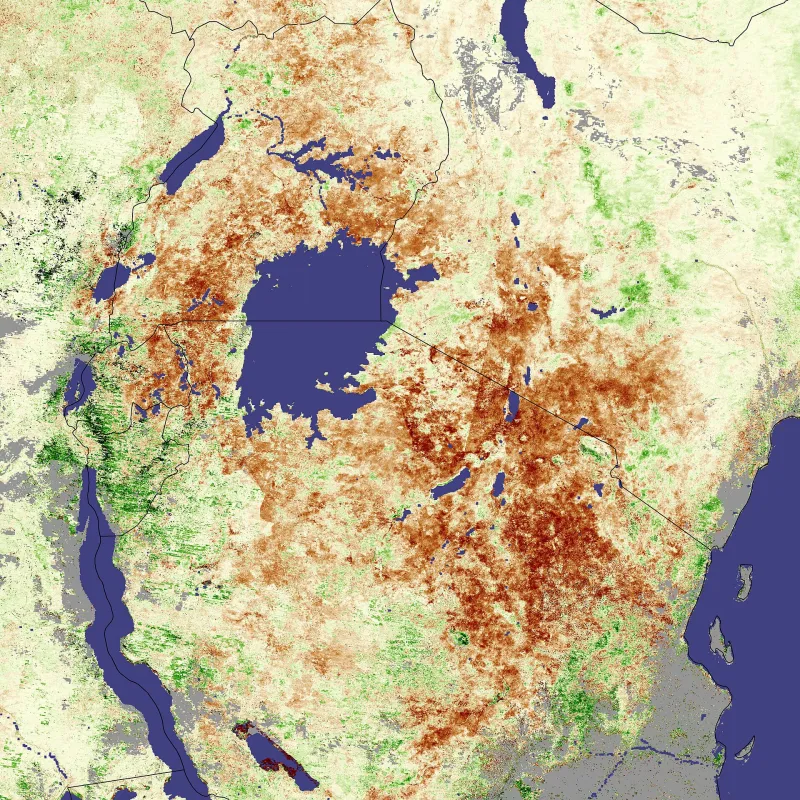
The extra heat already stored in the climate system has set off self-reinforcing processes, including severe drought and forest fires in the tropical rainforests of Indonesia and the Amazon basin. The UK Met Office forecasts a sharp rise in atmospheric carbon dioxide in the coming months, as drought-stressed tropical ecosystems grow more slowly and lock up less carbon.
What the 2 °C figure does — and does not — mean
A daily global anomaly and the Paris temperature goal are different metrics. The former is one day’s planetary average; the latter is a multi-decade climate mean. Six days above 2 °C are a warning about the rate of warming, not by themselves the loss of the international target. Tropical drought and fires can still raise later years’ carbon dioxide through the global carbon cycle.
- 2.24 °C
- Monday’s daily global anomaly
- 6 days
- consecutive days above 2 °C
- 2.05 °C
- previous daily peak (2023)
- 1870s
- last El Niño of comparable scale
Zivor poll
How concerning is a six-day run above 2 °C globally?
Enjoyed it? Share it!
Sources
This article was produced with the help of artificial intelligence, based on the sources listed. How we work
Comments
Comments are reviewed by automated moderation every four hours; anyone can report unlawful content. Rules