Antarctic sea ice falls to record daily lows in October 2026
Satellite measurements show Antarctic sea ice extent sank to record daily lows in October 2026, below even the extreme levels of October 2023. The winter maximum was the third-lowest in the satellite record.
· 3 min read
In brief
- October 2026 brought record daily lows in Antarctic sea-ice extent.
- The winter maximum on 11 September was 17.72 million km², third-lowest since 1979.
- By mid-October, extent was about 12% (2.3 million km²) below the long-term average.
- The sea-ice season has shortened by up to three to four months in many areas.
A steep drop after the winter peak
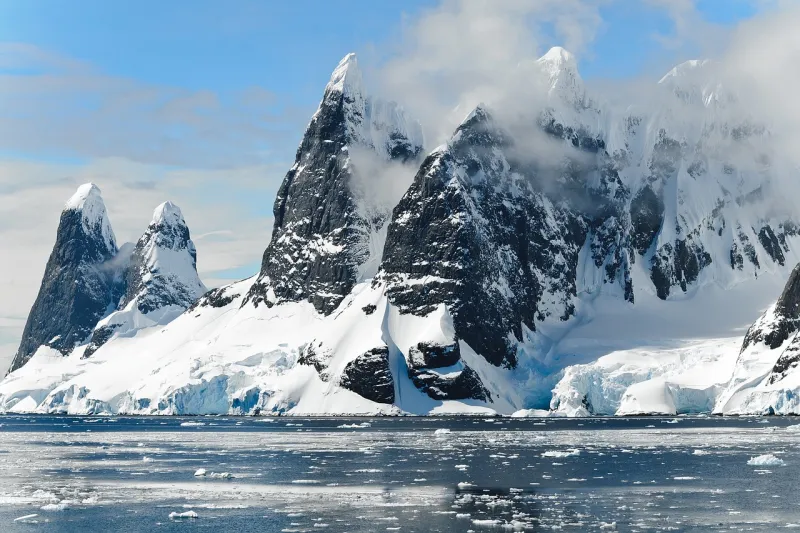
Antarctic sea ice reached its annual winter maximum of 17.72 million square kilometres on 11 September 2026, the third-lowest peak in the satellite record that began in 1979. In the four weeks that followed, the ice cover shrank by about 1.3 million square kilometres.
That rapid decline left overall extent around Antarctica about 2.3 million square kilometres, or 12 per cent, below the long-term average for mid-October — the lowest on record for that time of year. Daily coverage in October 2026 fell below even the extremely low extent of October 2023, the year when poor sea-ice conditions led to the deaths of thousands of emperor penguin chicks.
A shorter ice season, around the whole continent
Each year Antarctic sea ice expands and retreats in a dramatic seasonal cycle. At its winter peak it covers about 3.6 per cent of Earth’s surface and 5.1 per cent of the global ocean. This floating blanket of ice and snow reflects sunlight, insulates the ocean, supports marine ecosystems and helps regulate weather and climate.
In earlier decades, low extents were largely confined to particular regions, such as west of the Antarctic Peninsula. Low coverage now occurs all around Antarctica in both summer and winter. The change is not only in area: later freeze-up and earlier retreat have shortened the annual sea-ice season by as much as three to four months in many areas.
Rapid loss of Antarctic sea ice began in 2015 and, in 2023, shifted abruptly to record-low coverage from autumn through winter. The four lowest annual winter-maximum extents since 1979 have all occurred in the past four years. Dr Rob Massom, a sea-ice scientist at the Australian Antarctic Division, said the ice is now also declining at a time of year when the ocean should be freezing and the ice cover advancing.
Dr Krystyna Saunders, a climate scientist at the same division, described the recent patterns as unprecedented in the satellite series and substantially beyond natural variability in Antarctic sea-ice coverage over past centuries. Strong evidence is emerging of a regime shift in Antarctica’s ocean–sea ice–atmosphere system.
What does this mean for the global climate?
By covering the dark ocean with a highly reflective layer of snow and ice, sea ice helps moderate global temperatures and regulates exchanges of heat, moisture, greenhouse gases and wind energy between ocean and atmosphere. Along the coast it acts as a buffer, absorbing wave energy and shielding ice shelves. As sea ice declines, more wave energy reaches the shore, raising the risk of iceberg calving and reducing the stability of ice shelves that restrain the Antarctic Ice Sheet and limit its contribution to sea-level rise. In some cases this has led to large-scale ice-shelf collapse.
Pack ice and coastal fast ice provide habitat, shelter, food and a breeding platform for life from microscopic algae and krill to penguins, seals and whales. Massom described the annual sea-ice cycle as a crucial rhythm of the planet’s environment and climate system, and said there are growing signs that this rhythm is faltering.
- 17.72 million km²
- winter maximum, 11 Sept 2026
- 1.3 million km²
- loss in the following four weeks
- 12%
- below the long-term mid-October average
- 1979
- start of the satellite record
Zivor poll
How concerning do you find the rapid loss of Antarctic sea ice?
Enjoyed it? Share it!
Sources
- Antarctic sea ice extent hits new low (Phys.org – Environment)
This article was produced with the help of artificial intelligence, based on the sources listed. How we work
Comments
Comments are reviewed by automated moderation every four hours; anyone can report unlawful content. Rules