
El Niño drought puts Southern Africa and Dry Corridor on hunger list
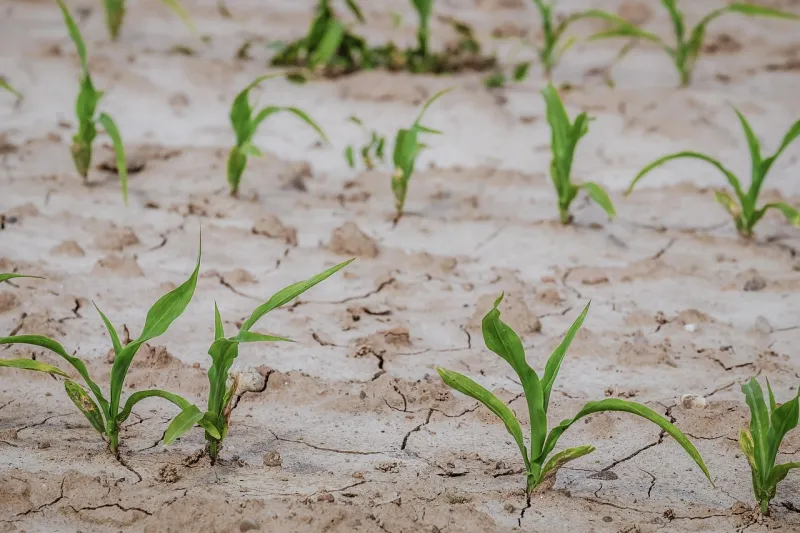
The Global Network Against Food Crises now lists 16 hunger hotspots, three more than in June. Southern Africa and Central America’s Dry Corridor were added because of a strengthening El Niño, which is bringing drier, hotter weather that threatens planting.
· 3 min read
In brief
- Sixteen hunger hotspots, three more than in June; Lebanon has left the list.
- El Niño is the main driver in Southern Africa, the Dry Corridor and north-eastern Uganda.
- Up to 3 million people in Zimbabwe and 3.2 million in Guatemala could face a severe acute crisis.
- FAO and WFP aim to assist 9 million people in 22 countries before the worst impacts.
The Global Network Against Food Crises, which publishes a report twice a year, today lists 16 hotspots, compared with 13 in June. Lebanon has left the group. In the newly identified areas — Southern Africa, Central America’s Dry Corridor and north-eastern Uganda — El Niño is the decisive driver. Chad was added because the effects of the conflict in neighbouring Sudan are spilling across the border, according to a FAO statement.
Drier, hotter planting weather in Southern Africa
El Niño is still intensifying and may become one of the strongest on record. In Southern Africa, drier and hotter weather is putting planting, farm work and the coming harvest at risk. Forecasts suggest that in the months ahead, through March 2027, as many as 3 million people in Zimbabwe, 2.6 million in Malawi and 1.8 million in Mozambique could face a severe acute food-security crisis.
The driest Primera in 40 years
In the Central American Dry Corridor, the 2026 Primera — the first cropping season — was the driest in 40 years. In many areas crop losses exceeded 75 per cent. Food stocks are running down, so the 2027 lean season may begin earlier than expected. In Guatemala alone, 3.2 million people could face a severe acute food-security crisis between October 2026 and February 2027.
A joint FAO and World Food Programme (WFP) plan to get ahead of El Niño’s impacts aims to assist 9 million people in 22 countries. Acting before the gravest effects set in could prevent a shrinkage of harvests, livestock and livelihoods.
Conflict, and a sharp drop in aid
Elsewhere, conflict and armed violence remain a principal cause of acute hunger. That holds for 12 of the 16 critical hotspots, including all five of the most alarming: Sudan, South Sudan, Somalia, parts of Nigeria and Yemen. In four of those five, people are in — or are highly likely to enter — the Integrated Food Security Phase Classification (IPC) “catastrophe” phase, the most severe grade, associated with starvation and death.
In those five hotspots the situation has been essentially unchanged since 2022, yet humanitarian funding for food security and nutrition has fallen by 62 per cent, from 5 billion dollars in 2022 to 2 billion in 2025. Four further crises — Afghanistan, the Democratic Republic of the Congo, Haiti and Palestine — are classed as “very concerning”. In the Gaza Strip, food security began to improve after the October 2025 ceasefire, but the gains are fragile; in the West Bank the acute crisis is expected to worsen.
What this means
Drought here is a climate driver that disrupts planting calendars and household stocks. FAO and WFP say early action — before the worst El Niño impacts arrive — is meant to protect crops, livestock and incomes. They call for urgent humanitarian action in all 16 hotspots, especially where famine is a risk, and for safe, unimpeded access to people in need.
- 16
- hunger hotspots in the latest report
- 75%
- crop losses in parts of the Dry Corridor
- 3.2 million
- Guatemala, severe acute crisis (Oct 2026–Feb 2027)
- 62%
- drop in food-security humanitarian funding, 2022–2025
Zivor poll
Which new hotspot do you see as the gravest El Niño impact?
Enjoyed it? Share it!
Sources
- Fokozódik a helyzet: tovább nőhet az éhezés a világban (Agrárszektor)
This article was produced with the help of artificial intelligence, based on the sources listed. How we work
Comments
Comments are reviewed by automated moderation every four hours; anyone can report unlawful content. Rules