Barents Sea ice loss lifts Eastern Europe’s spring wheat, cools the west
Lower February ice in the Barents Sea has been linked to warmer eastern European springs, earlier plant growth and higher wheat yields — and the opposite pattern in Western Europe, including Spain.
· 3 min read
In brief
- Less February Barents ice meant warmer eastern and cooler western European springs from 1982 to 2022.
- Nearly half of the 40-year rise in spring photosynthesis is tied to ice loss.
- Belarus wheat: a 16.5% yield gap; Spain: about 5% lower in ice-poor years.
- Winds pull Mediterranean warmth east and cooler Atlantic air towards Iberia.
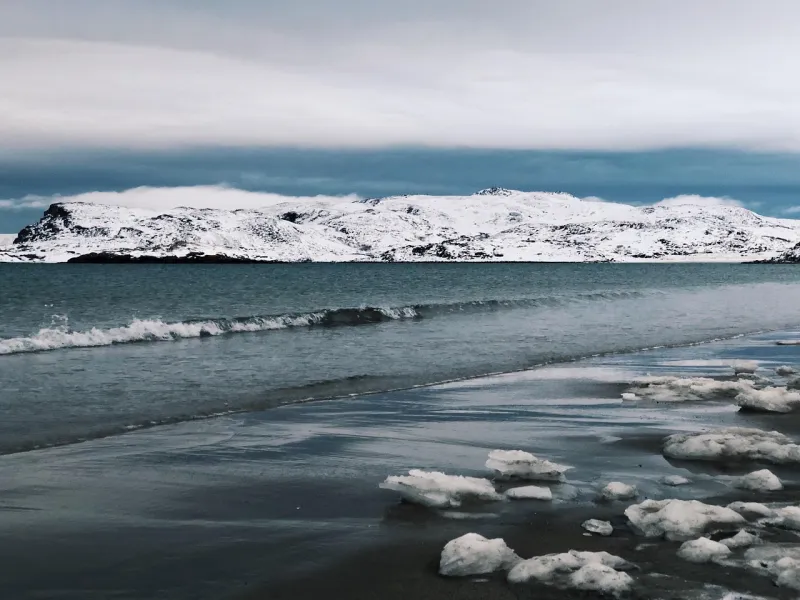
Sea ice in the Barents Sea, an Arctic basin north of Norway and Russia, has been shrinking for decades as the region warms. A study led by researchers at Nanjing University finds that this loss reshapes spring weather well beyond the polar latitudes — and splits Europe’s vegetation response: more favourable in the east, less so in the west.
Published in Science Advances, the work examined February ice cover from 1982 to 2022, together with vegetation growth, wheat yields and weather across Europe. The team focused on year-to-year swings, to limit the influence of long-term trends such as global warming and rising carbon dioxide. Computer simulations isolated how ice-cover changes alone could alter European weather patterns.
A clear east–west divide
In years with less Barents Sea ice, spring temperatures were higher across much of Eastern Europe and lower in Western Europe. In the east that meant an earlier start to the growing season and fewer frost days once plants were growing. The researchers estimate that nearly half of the rise in spring photosynthetic activity over the past 40 years is attributable to sea-ice loss.
Wheat followed the same geography. In Belarus, yields were higher in years of unusually little ice than in years of extensive cover; the gap amounted to about 16.5 per cent of the country’s 20-year average wheat yield. In Spain, yields were around 5 per cent lower in ice-poor years. The authors write that the response is heterogeneous: Barents Sea ice-area loss significantly enhances spring gross primary productivity — the carbon plants lock up — and wheat yields across Eastern Europe, yet suppresses them in Western Europe.
Mediterranean warmth, Atlantic chill
With less ice, more heat escapes from the ocean into the atmosphere. That shifts the wind field, drawing warm air from the Mediterranean into Eastern Europe and cooler air from the North Atlantic towards the Iberian Peninsula.
The authors conclude that the Arctic’s rapid move towards a seasonally ice-free state is expected to alter, rather than necessarily intensify, Arctic forcing of mid-latitude climate.
What it means for farmers
The finding is statistical and modelled, not a forecast for a single season: over the decades studied, scant February ice in the Barents Sea went with warmer eastern springs, an earlier growing season and — in Belarus — higher wheat yields. In Western Europe, especially Iberia, cooler springs held back growth and harvests. The story for readers is a split European spring, not a uniform agricultural windfall.
- 1982–2022
- February ice record analysed
- nearly 50%
- spring photosynthesis rise linked to ice loss
- 16.5%
- Belarus wheat-yield difference
- about 5%
- Spanish wheat-yield drop in low-ice years
Zivor poll
According to the study, which region’s spring wheat fared better in low Barents ice years?
Enjoyed it? Share it!
Sources
- Melting Barents Sea ice gives Eastern Europe's farmers a spring boost (Phys.org – Earth Sciences)
This article was produced with the help of artificial intelligence, based on the sources listed. How we work
Comments
Comments are reviewed by automated moderation every four hours; anyone can report unlawful content. Rules