Ringed seals lose habitat as Arctic sea ice shrinks at Svalbard
Ringed seals are built for Arctic sea ice. Freeze-up is later, spring break-up earlier, and snow on the ice is thinner; habitat around Svalbard has been shrinking for two decades.
· 2 min read
In brief
- Ringed seals are adapted to Arctic sea ice and snow dens on the ice.
- Ice is freezing later, breaking up earlier, with less snow on top.
- Habitat at Svalbard has been shrinking for two decades.
- Conservationists warn of an uncertain future if warming continues.
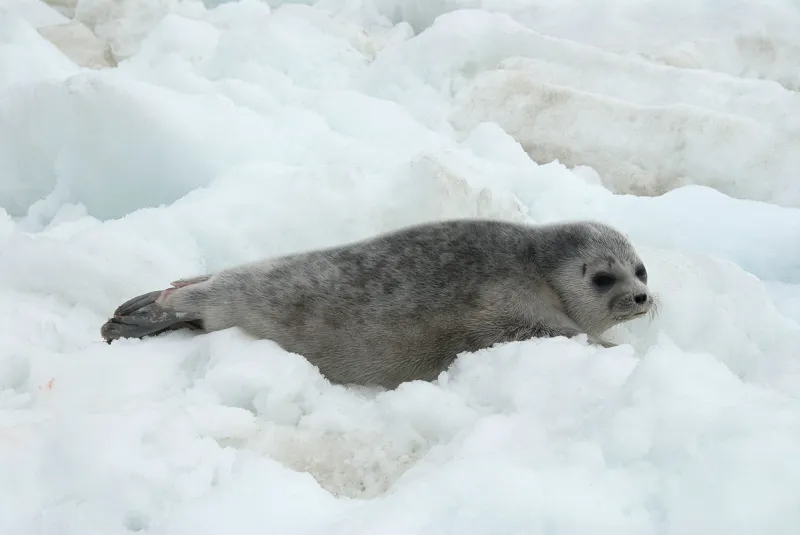
On the frozen Arctic ocean, a ringed seal — named for the small white rings in its coat — lives a life tied to sea ice. As the climate warms, that ice is forming later, breaking up earlier in spring, and gathering less snow on top. The habitat is shrinking.
Small seals, sharp claws
Ringed seals are among the world’s smallest seals, often weighing less than 68 kilograms when fully grown. Thick, sharp claws on their flippers let them cut breathing holes in the ice. They surface through those holes after hunting beneath the frozen cover.
They also build dens in the snow that lies on the ice, and raise their young in those sheltered nurseries. Survival therefore depends not only on ice cover, but on how much snow accumulates above it.
Later freeze, earlier break-up
Arctic sea ice is in decline as the climate warms. Freeze-up comes later in the year, break-up arrives earlier in spring, and less snow settles on the ice. Breathing holes and snow dens are available for a shorter, less reliable season.
In a study of Svalbard, the islands north of Norway, scientists found that ringed seal habitat there has been shrinking for two decades. Sea ice frames how the animals hunt, rest and breed.
What this means for the species
Conservationists warn of an uncertain future if the climate continues to warm. The ringed seal is adapted to frozen seas, under-ice hunting and snow dens, not to open water. If that system shortens and thins, both pup-rearing and feeding may become more constrained.
Seal calls used in public accounts of the species came from Cloudberry, a ringed seal that was a patient at Seal Rescue Ireland. The sound evokes a way of life still bound to Arctic ice — a setting that is contracting as the climate warms.
- 68 kg
- adults often weigh less than this
- 2 decades
- habitat shrinkage at Svalbard
Zivor poll
How concerning is habitat loss for Arctic ringed seals?
Enjoyed it? Share it!
Sources
- Ringed seals face habitat loss as Arctic ice declines (Yale Climate Connections)
This article was produced with the help of artificial intelligence, based on the sources listed. How we work
Comments
Comments are reviewed by automated moderation every four hours; anyone can report unlawful content. Rules