Surface waters fell sharply in the record-hot years of 2023 and 2024
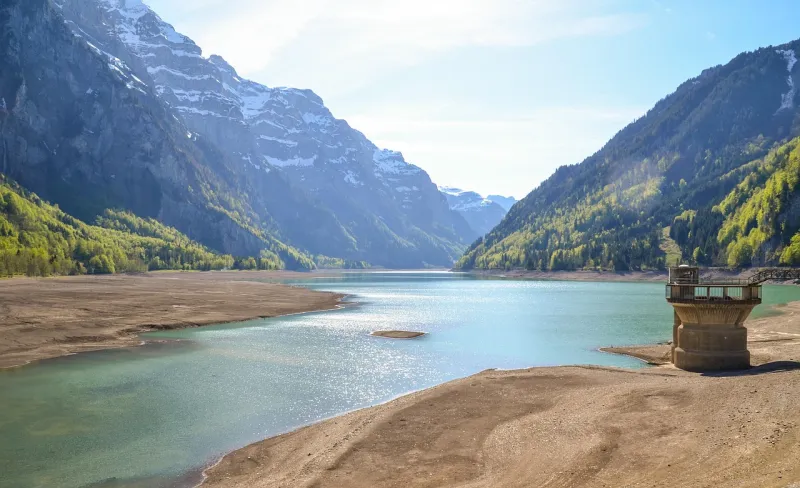
In 2023 and 2024, the two hottest years on record, global river discharge ran about 5.7 per cent below normal. Together with lakes and reservoirs, that was the largest simultaneous drop in surface water since at least 1991.
· 2 min read
In brief
- Global river discharge ran 5.7% below normal in the record-hot years 2023–24.
- With lakes and reservoirs, it was the largest simultaneous surface-water drop since at least 1991.
- In South America, river discharge fell 17.8% and standing waters 16.5%.
- Most of the global rainfall surplus fell over the oceans, while many land regions ran short of water.
A comprehensive analysis led by the Chinese Academy of Sciences examined 2023 and 2024, the two hottest years in the instrumental record. Over that two-year span, global river discharge ran about 5.7 per cent below normal. Combined with water stored in lakes and reservoirs, this produced the largest simultaneous decline in surface waters worldwide since at least 1991. Researchers compared discharge measurements from 150 major catchments with satellite records of more than 1.2 million lakes and reservoirs covering 1991 to 2025.
A more extreme water cycle
As the planet warms, the water cycle is becoming more extreme. A warmer atmosphere draws more moisture from soils and surface waters, and a heated land surface further speeds evaporation. That moisture then falls elsewhere as intense rain, sharpening the swings between drought and flood.
Sulagna Mishra, a co-author of the study, pointed to a central paradox of global warming: a warmer atmosphere does not automatically mean more water on land. Precipitation increased globally during the period under review, but most of the surplus fell over the oceans, while many continental regions faced serious water shortages.
South America: floods, yet less water overall
The shifts were most striking in South America, where river discharge fell by 17.8 per cent and the level of standing waters and reservoirs by 16.5 per cent. According to Ji Ho, associate professor of hydrology and climate research at the University of East Anglia, parts of the continent suffered severe flooding in 2023 and 2024, yet rivers as a whole carried far less water than usual. A river, he noted, can overtop its banks in a single downpour while remaining low for most of the year.
Freshwater supplies are also under pressure from drought linked to climate change, a strong El Niño — the periodic warming of the equatorial Pacific that rearranges rainfall worldwide — as well as pollution and over-use.
What this means for water security
Professor Christian Dunn, chair of the British Ecological Society’s policy committee, warned that freshwater can dwindle extremely quickly even in regions traditionally regarded as wet, and that floods, including flash floods, do not by themselves guarantee water security. For farming, drinking-water supply and navigation, a burst of heavy rain does not make up for persistently low levels in rivers and reservoirs.
Richard Allan, a climate scientist at the University of Reading, said the unprecedented decline in surface waters shows that harmful swings between dry and wet extremes are already being felt across the planet’s entire terrestrial water system.
- 5.7%
- global river-discharge shortfall, 2023–24
- 17.8%
- South American river-discharge decline
- 16.5%
- South American lakes and reservoirs
- 1.2 million
- lakes and reservoirs analysed
Zivor poll
What concerns you most about global freshwater?
Enjoyed it? Share it!
Sources
- Évtizedek óta nem látott folyamat indult be: drámai sebességgel apadnak a Föld vízrendszerei (Portfolio)
This article was produced with the help of artificial intelligence, based on the sources listed. How we work
Comments
Comments are reviewed by automated moderation every four hours; anyone can report unlawful content. Rules